What is food cost and how is it calculated?
Food cost shows how much of a product's selling price is consumed by the ingredients required to prepare it. At product level, the basic formula divides recipe cost by net selling price and multiplies the result by one hundred. A product with a TRY 120 recipe cost and a TRY 400 net selling price therefore has a 30 percent food cost.
For a period-level restaurant calculation, the same principle is applied to total ingredient consumption and net food-and-beverage sales. Rules for tax, refunds, staff meals and waste should be defined consistently so that different periods can be compared accurately.
Recipe and portion standards create reliable data
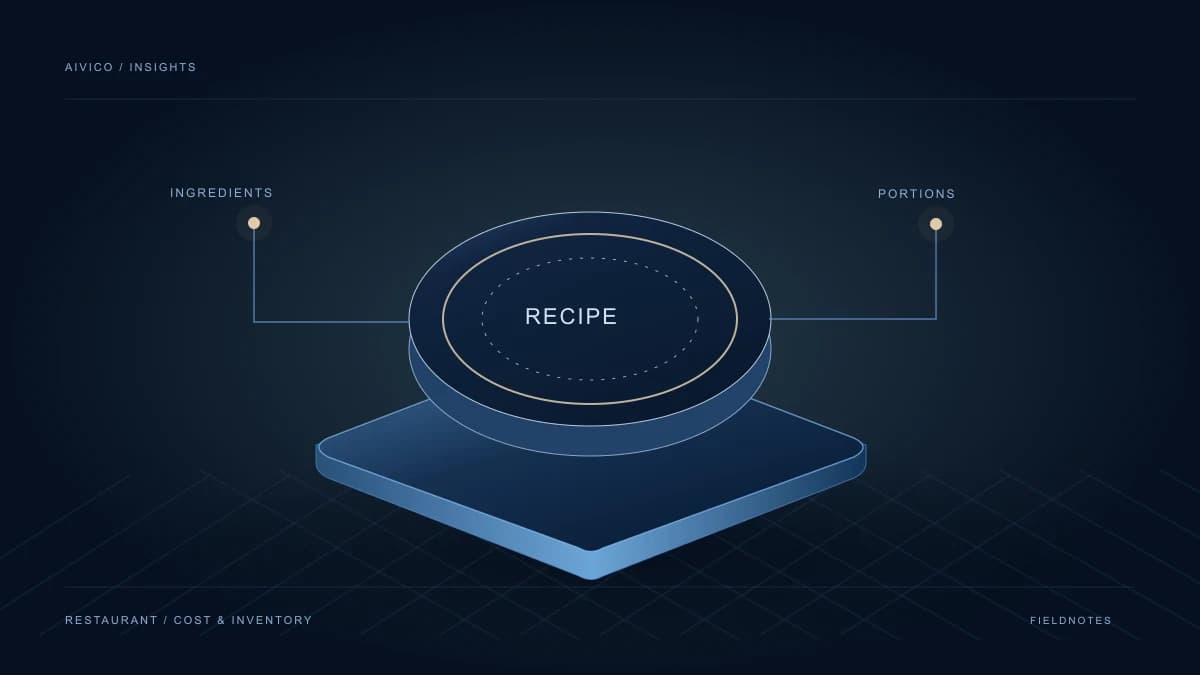
A reliable food cost calculation starts with an accurate product recipe. Ingredients, quantities, units, preparation losses and product options should be defined separately. When choices such as size, weight or milk type change cost, their option recipes need to be tracked independently from the base product.
Without portion control, theoretical cost in the system gradually diverges from actual kitchen consumption. Recipe cards should therefore become a shared operating standard for finance, kitchen and service teams.
How inventory movements affect actual cost
Purchase-price changes, count variances, waste, warehouse transfers and manual stock usage directly affect product cost. Looking only at the latest purchase price is not enough; businesses also need to understand movement sources and consumption during the reporting period.
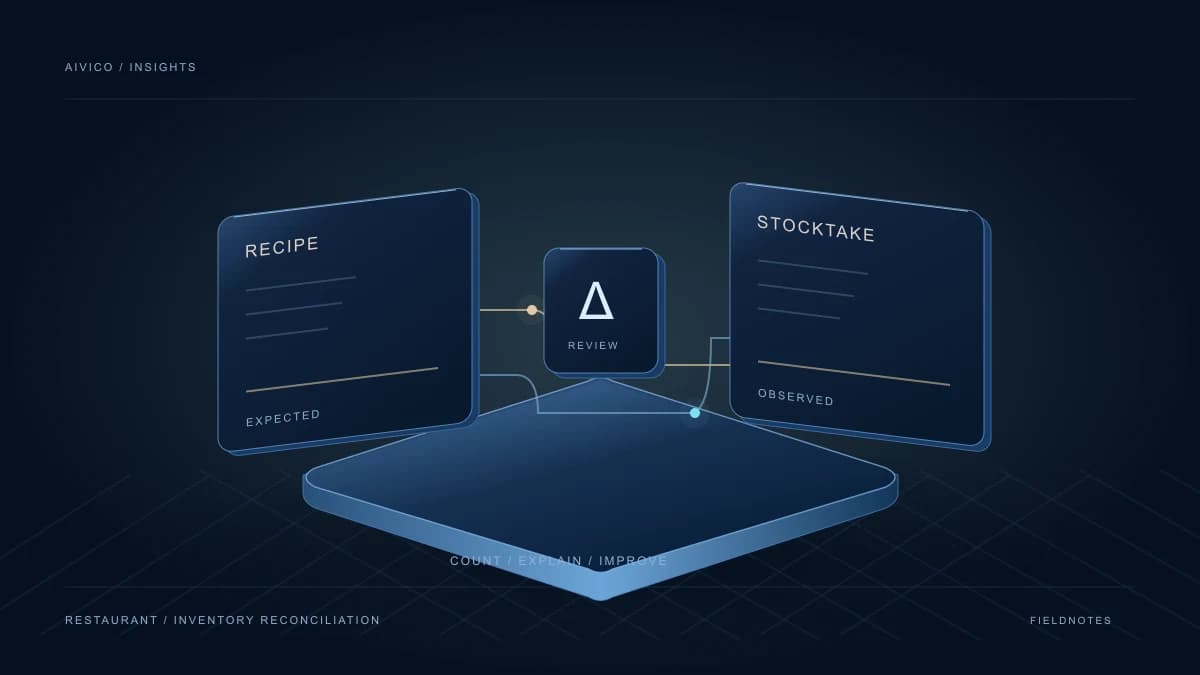
Recording recipe-based inventory consumption when a sale occurs makes the gap between theoretical usage and physical stock visible. A growing difference can signal portion variance, missing records, an inaccurate recipe or waste that needs investigation.
Gross profit, contribution margin and menu engineering
A low food cost percentage does not automatically identify the best product. Sales volume, contribution per item and share of total revenue should be evaluated together. A high-margin product with low demand requires a different action from a lower-margin product that sells at high volume.
Menu engineering compares popularity and profitability to support pricing, portion, recipe and product-positioning decisions. Pricing can then reflect the restaurant's actual cost and target margin instead of relying only on competitor prices.
Acting on live cost and sales data
When recipes, inventory, sales and supplier data live in separate files, cost analysis quickly becomes outdated. A connected restaurant management system can show how a purchase-cost change affects recipe cost, food cost percentage, gross profit and suggested selling price within the same data flow.
Ordwell connects product and option recipes, inventory movements, critical stock, cost thresholds and sales performance in one operational structure. Managers can act when a low-margin, cost-increase or stock-risk signal appears instead of only reviewing a historical report.