What does CRM manage?
CRM makes the customer lifecycle visible from prospecting through post-sale relationships. Company and contact records, opportunities, proposals, meetings, tasks and the sales pipeline are common CRM capabilities.
When sales follow-up depends on personal notes or disconnected spreadsheets, CRM creates a shared operating model. Management can monitor opportunity stages, sales cycles and customer interactions using current information.
What is ERP and why is its scope broader?
ERP brings business resources and operations into a common data structure. Procurement, inventory, warehouses, orders, finance, production, human resources or project operations can be included according to the organization.
The objective is not only to digitize departments separately. ERP creates connected flows so that a sale is reflected consistently in inventory, delivery, invoicing and financial records.
The main differences between ERP and CRM
CRM is more focused on external customer relationships and revenue opportunities, while ERP is more focused on internal resources and delivery capacity. CRM improves sales visibility; ERP strengthens operational control and data consistency.
The boundary is not identical in every product. Some ERP platforms include CRM modules, while some CRM tools include orders or invoicing. Organizations should evaluate process depth and decide which system owns each primary record.
Should a company implement CRM or ERP first?
CRM may create faster value when the main problems are lead follow-up, proposal discipline and sales forecasting. ERP may be the better priority when inventory variance, procurement control, order fulfillment or financial consistency is critical.
Many growing businesses need both areas. Planning a shared data model and beginning with the most critical module is usually safer than attempting to launch the entire system at once.
What matters in ERP and CRM integration?
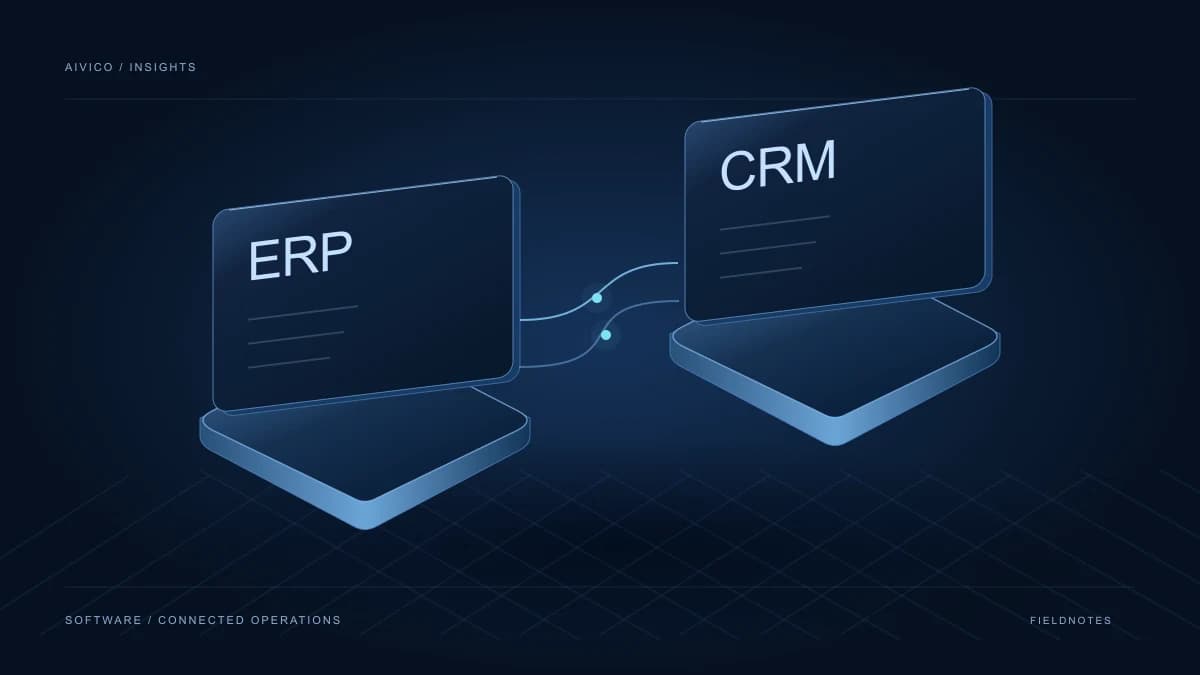
Teams need to decide which system owns customer, product, price, order and payment records. Without ownership rules, organizations can end up with inconsistent customer names, outdated prices or duplicate orders.
Integration is more than transferring data. Retry behavior, user permissions, change history and synchronization frequency are also parts of the design.
Off-the-shelf or custom ERP and CRM?
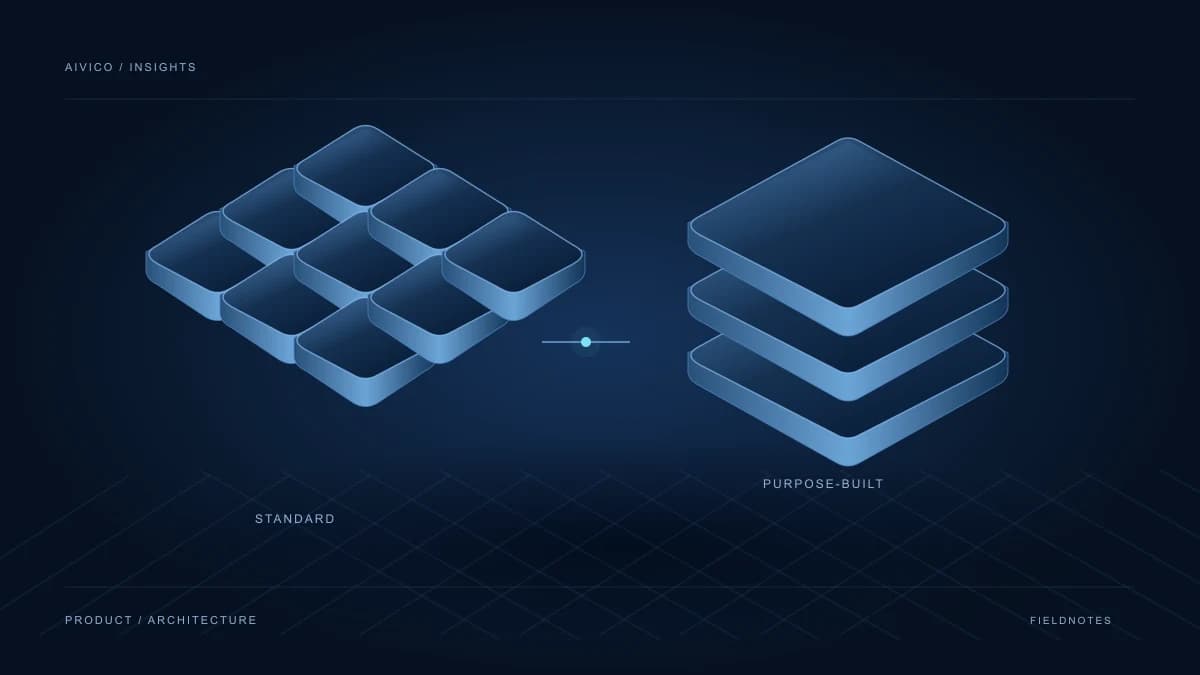
Companies with standard sales and accounting workflows can begin quickly with packaged software. Custom development becomes more relevant when business-specific approvals, industry rules, extensive integrations or different user portals are required.
Aivico starts ERP and CRM projects by mapping business data flows and bottlenecks, then develops the required modules incrementally on a scalable architecture.